
Microbiome Health
Nourish Your Gut. Support Your Microbiome.
Get in Touch With Us!
We aim to get back to you in 24 hours.
Your gut is home to trillions of microorganisms that collectively form your gut microbiome.
What you eat can influence this complex community.
At Microbiome Health, we provide personalised nutrition support focused on improving dietary quality, increasing food diversity and helping you build sustainable habits that support your digestive health.
No extreme gut cleanses. No miracle supplements. Just practical, food-first nutrition.
Start Supporting Your Gut Microbiome
What Is the Gut Microbiome?
Your digestive system naturally contains a vast community of microorganisms, including bacteria.
These microorganisms interact with the foods you eat, particularly dietary fibre.
Different types of fibre are fermented by bacteria in the large intestine, and eating a range of fibre sources can help support microbial diversity.
That's why microbiome nutrition isn't about finding one perfect “gut food”.
It's about the overall variety of your diet.
Feed Your Gut With Variety
One of the simplest ways to think about microbiome nutrition is:
Different plants provide different fibres.
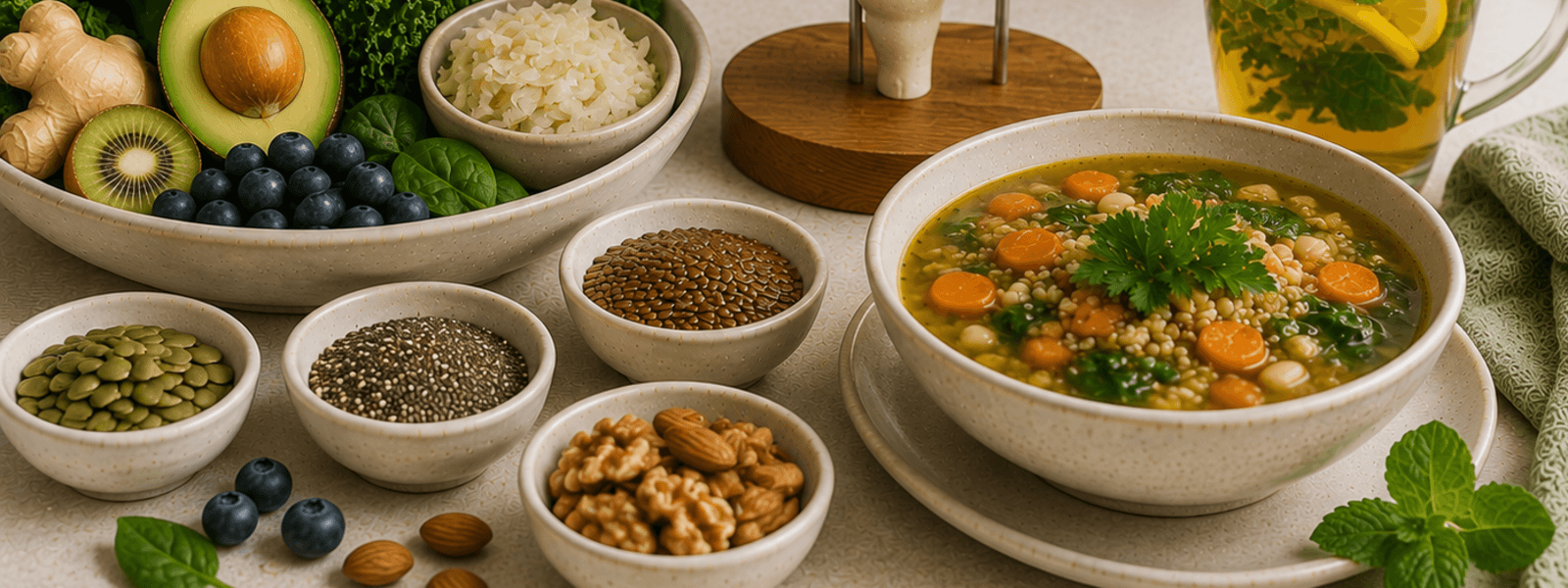
Where appropriate for your digestive tolerance, we can help you increase variety across:
- Vegetables
- Fruit
- Wholegrains
- Beans and lentils
- Nuts
- Seeds
- Herbs and spices
The NHS recommends adults aim for around 30g of fibre per day, ideally from a variety of sources.
If your current intake is low, however, increasing fibre gradually can be more comfortable than suddenly making a dramatic change.
Get Personalised Microbiome Nutrition Guidance
Prebiotic Foods
You've probably heard the terms prebiotic and probiotic.
They're not the same thing.
Prebiotics are types of carbohydrate that gut bacteria can use. Examples include compounds naturally found in foods such as onions, garlic, asparagus and bananas.
Rather than immediately buying a prebiotic supplement, we can look at the foods already in your diet and identify opportunities to increase variety.
What About Probiotics?
Probiotics are live microorganisms found in certain foods and supplements.
But not every probiotic product is the same, and the evidence varies depending on the product and reason for taking it.
That's why we don't automatically recommend a cupboard full of gut-health supplements.
Our starting point is usually much simpler:
What are you eating every day?
Build Your Microbiome-Friendly Plate
Microbiome nutrition doesn't require unusual ingredients.
A typical day could incorporate foods such as:
Breakfast
Oats with yoghurt, berries and seeds.
Lunch
Wholegrain bread with protein and a colourful salad.
Dinner
Fish or chicken with potatoes and several vegetables.
Plant-based meal
Lentils, beans or chickpeas with wholegrains and vegetables.
Snacks
Fruit, nuts, yoghurt or other foods that suit your diet.
The specific foods can be personalised around your preferences and digestive tolerance.
More Diversity, Not More Restriction
Gut-health advice can sometimes become strangely restrictive.
Avoid gluten.
Avoid dairy.
Avoid grains.
Avoid certain vegetables.
Avoid carbohydrates.
But unnecessarily removing foods can also reduce dietary diversity.
At Microbiome Health, our goal is generally to find foods you can add and enjoy, rather than constantly searching for something else to eliminate.
If particular foods consistently cause digestive symptoms, that's different — and those symptoms may warrant individual nutritional or medical assessment.
Your Personalised Microbiome Nutrition Plan
Everybody starts from a different place.
Perhaps you already eat plenty of vegetables but very few wholegrains.
Maybe you rarely eat beans or lentils.
Perhaps your diet contains the same handful of plant foods every week.
Or digestive symptoms mean you've gradually restricted your diet.
We can review your:
Diet → fibre → plant variety → meal habits → restrictions → supplements → digestive tolerance
Then identify realistic improvements.
Why Choose Microbiome Health?
Food-First
We prioritise everyday nutrition before complicated supplements.
Diversity Focused
The emphasis is on building greater dietary variety where appropriate.
Personalised
There's no universal microbiome meal plan.
Practical
Changes are designed to fit around normal meals and everyday life.
Evidence-Informed
We avoid exaggerated claims about “resetting”, “detoxing” or completely transforming your microbiome.
Frequently Asked Questions
How can I support my gut microbiome?
A varied diet containing appropriate sources of dietary fibre provides a sensible foundation. Fibre-rich foods include vegetables, fruit, wholegrains, beans, lentils, nuts and seeds.
How much fibre should I eat?
UK guidance recommends 30g of fibre per day for adults.
Should I increase fibre quickly?
No. If your current intake is low, increase it gradually and maintain adequate fluid intake, as sudden increases can cause bloating and abdominal discomfort.
Do I need probiotic supplements?
Not necessarily. Different probiotic products contain different microorganisms and evidence varies depending on what they're being used for.
Do I need a microbiome test?
You don't need a commercial microbiome test simply to start improving the quality and diversity of your diet.
Build a More Diverse Diet
Supporting your gut microbiome doesn't need to be complicated.
Start with food.
Increase variety.
Choose different sources of fibre.
Make changes gradually.
And build an eating pattern you can maintain.
Microbiome Health provides personalised nutrition support to help you put those principles into practice.
What People are Saying About Us
★★★★★
I learned so much about dietary variety without being overwhelmed by complicated microbiome terminology.
Freya M.
North West
★★★★★
The food-first approach was exactly what I wanted.
Sophie T.
North West
★★★★★
I've got loads of practical ideas for adding more variety to my normal meals.
Jennifer C.
North West
★★★★★
I appreciated that there was no pressure to buy expensive tests or supplements.
Amber R.
North West
Build a More Diverse Diet Today